This post is intended to introduce and summarize the main concepts presented in my book, The Trinitarian Mystery: Escaping Solipsism.
Process is meaningless without objects that interact, but a world of objects alone is a world without content. There must be nodes AND edges.
There are three models that I have found particularly fruitful that (artificially) divide Totality into two nodes, or abstract objects, with an edge (relationship) between them.
1. Facts, abstract concepts, and the relationship or interaction between them (e.g. the practice of science).

2. Self and Other, and the relationship or interaction between them (e.g. myself, a living body, in an environment).
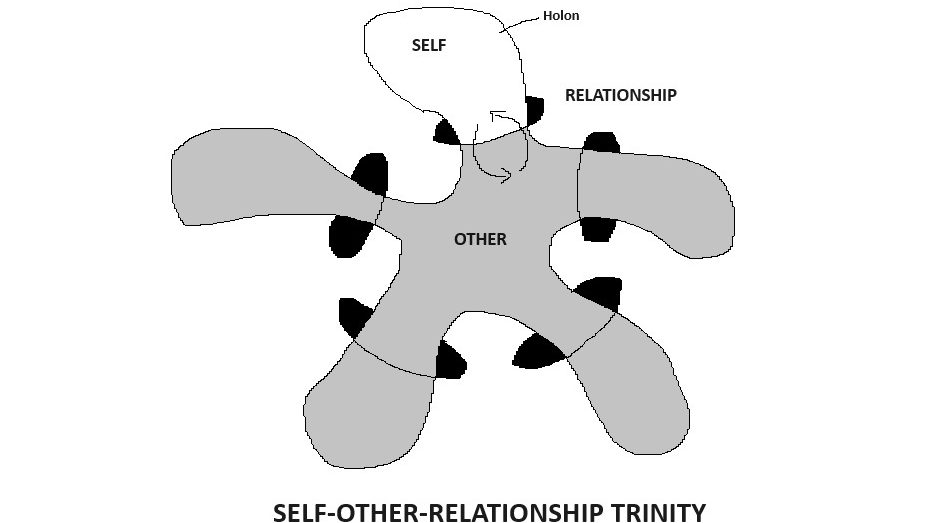
3. Assertion and doubt, and the relationship or interaction between them (e.g. phenomenal consciousness or the increase in self-knowledge with time).
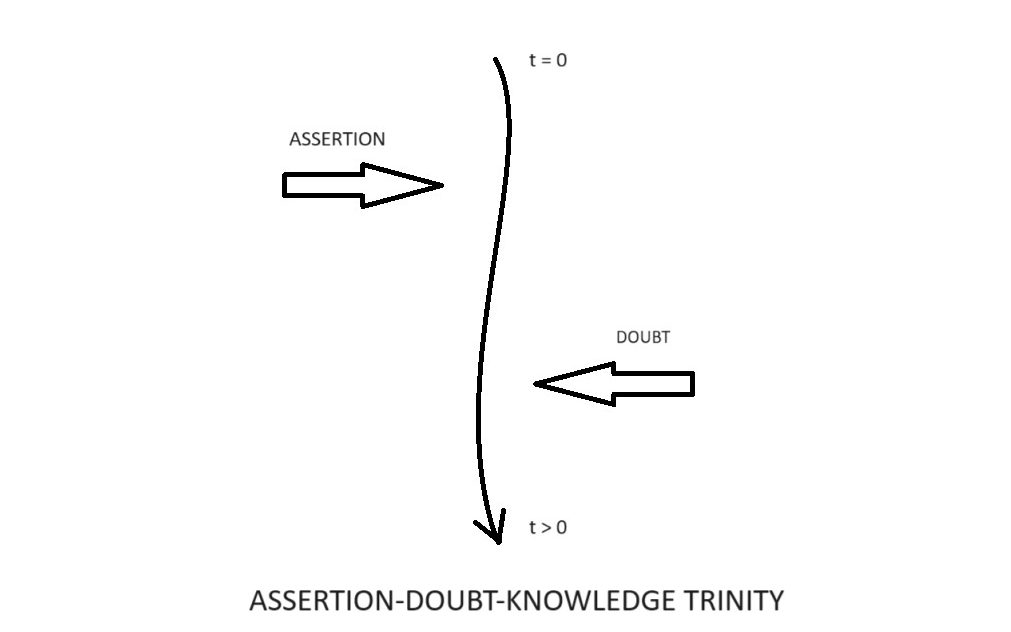
Each is a simplified schema, but extremely powerful and grounding in its simplicity. These are basic starting points for further thought—the seeds for more complex and elaborated models. These have been grounding for me through extreme personal turmoil (see here, here, or here).
For more in-depth exploration of each schema and their practical importance, see The Trinitarian Mystery: Escaping Solipsism.
 The Trinitarian Mystery
Leave a comment